अध्यात्म-एवं-दर्शन

The Burden of Becoming : Reflections by Frank Noronha

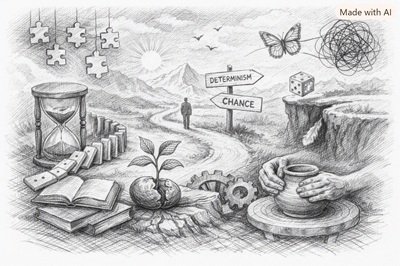
In his latest essay, Frank Noronha turns to the restless human urge to become — to chase success, meaning, or even peace — and asks whether this endless pursuit itself is the source of our unease. With honesty and simplicity, he reminds us that perhaps life does not demand answers, only the courage to live it as it is.

यथार्थ की सीमाएँ और विस्थापित स्वप्न का सत्य

स्वप्न को अक्सर हम भ्रम या कल्पना मानकर टाल देते हैं, परन्तु भारतीय दर्शन में वह यथार्थ का ही एक रूप है। डॉ. मधु कपूर इस लेख में स्वप्न और यथार्थ की सीमाओं को खोलते हुए हमें चेतना के उस दर्पण तक ले जाती हैं, जो हर अनुभव को समेटता और छोड़ता चलता है।


भारतीय चिंतन की धाराएँ : एक अकादमिक दृष्टि

सुभाष सेतिया की दो कविताएँ आप इस वेब-पत्रिका में पढ़ चुके हैं. इसी बीच हमने उनसे अनुरोध किया कि वह हमें अपने लेख भी भेजें तो उन्होंने भारतीय चिंतन की अलग-अलग धाराओं से परिचित कराते हुए यह लेख भेजा है जिसमें भारतीय दर्शन की परम्पराओं का एक सरलीकृत विवरण मिल जाता है. वैसे हमारे बहुत से पाठक डॉ मधु कपूर के दार्शनिक लेखों की श्रृंखला पिछले काफी समय से पढ़ रहे हैं लेकिन नए जुड़ रहे पाठकों के लिए सुभाष सेतिया का यह लेख विशेष रूप से उपयोगी रहेगा. 


The Burden of Control — Frank Noronha Reflects

Over the past weeks, readers of Raag Delhi have encountered Frank Noronha’s quietly luminous reflections — essays that turn ordinary experiences into meditations on awareness. His latest piece, The Burden of Control, continues this inward journey with a rare philosophical rhythm. In lucid, introspective prose, Noronha leads the reader into unseen corners of the self, revealing how the mind’s constant urge to control life becomes the hidden architect of disturbance. Yet, through this exploration, he gestures toward a gentler truth — that peace may arise not from mastery, but from surrender.

Growing Older Growing Simpler

This piece by Frank Noronha is neither a poem nor a conventional article — it's a personal philosophical essay or you may like to call it a "reflective essay" or "meditation." The form is quite deliberate: short paragraphs, occasional one-line statements standing alone, almost like verse at times. This is a stylistic choice to give the writing a contemplative, unhurried quality — inviting the reader to pause and reflect rather than race through. 


चित्त की तरंगें - काल का भ्रम - गाधि का महास्वप्न

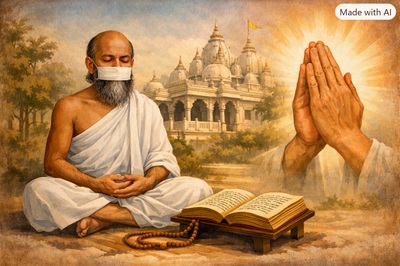
डॉ. मधु कपूर की स्वप्न‑श्रृंखला का यह दूसरा लेख पाठक को एक गहन दार्शनिक यात्रा पर ले जाता है और  स्वप्न, काल और चेतना के रहस्यमय संबंधों को उद्घाटित करता है। लेख में स्वप्न और जाग्रत अवस्थाओं के बीच की सूक्ष्म सीमाओं को माण्डूक्य उपनिषद की दृष्टि से समझाया गया है। 

We are trying to create a platform where our readers will find a place to have their say on the subjects ranging from socio-political to culture and society. We do have our own views on politics and society but we expect friends from all shades-from moderate left to moderate right-to join the conversation. However, our only expectation would be that our contributors should have an abiding faith in the Constitution and in its basic tenets like freedom of speech, secularism and equality. We hope that this platform will continue to evolve and will help us understand the challenges of our fast changing times better and our role in these times.

About us | Privacy Policy | Legal Disclaimer | Contact us | Advertise with us

Copyright © All Rights Reserved With

RaagDelhi: देश, समाज, संस्कृति और कला पर विचारों की संगत

Best viewed in 1366*768 screen resolution
Designed & Developed by Mediabharti Web Solutions