
The Fall of Pokrovsk: The Unlearned Lessons of Mariupol and the Inconvenient Truths of Geopolitics
Amandeep Midha
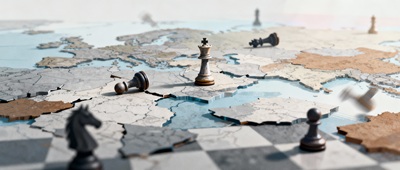
The capture of Pokrovsk by Russian forces is not just another pin on the map changing colour. It is a strategic and symbolic sledgehammer. Its significance lies not merely in the tactical gain, but in the deafening echo of a lesson the West refused to learn two years ago: the fall of Mariupol was not an anomaly; it was a preview.
Back then, the heroic, bloody last stand at the Azovstal plant was framed as a tragic but galvanizing defeat. The West saw resilience, a narrative of "they can slow Russia down." What it failed to see was the cold, grinding reality of a war of attrition where political will and artillery shell production rates matter more than viral social media clips. Today, with Pokrovsk fallen and the gates to central Ukraine creaking open, a brutal audit is due: Is the West, in fact, losing its own proxy war against Russia, fought with Ukrainian blood and Western stockpiles?
The much-lauded Javelins, Leopards, and the promised F-16s have failed to contain the inevitable. In a grim irony, this conflict has served as a massive, live-fire disposal exercise for both sides. Russia and the West have efficiently shed vast stockpiles of outdated conventional weapons—tanks rendered obsolete by hunter-killer drones, and 20th-century warplanes whose utility is questioned in a 21st-century battlefield. The dumping of old F-16 stocks into Ukraine, while sounding like robust moral support, was a move where everyone privately questioned its real tactical impact against Russia's integrated air defenses. The weapons meant to be a game-changer became a testament to a shifting paradigm of warfare and the disposal of yesterday's arsenal.
The choices ahead are no longer about "weapons packages" but about fundamental, painful concessions. The emerging Russian peace plan, as stark as it may seem, demands a level of Ukrainian sovereignty and demilitarization that should sound eerily familiar to any student of modern geopolitics. It is, in essence, the same model the collective West has long endorsed for a future Palestinian state: a territory technically sovereign but functionally neutered, its security controlled by others, its military potential capped.
The Morality of the Demilitarized Neighbour: A Tale of Two Crises
On pure idealism, one must ask: How can a powerful nation demand its neighbour be demilitarized? Is it moral? The answer, history coldly informs us, is irrelevant. The relevant question is: Why do they want it?
Russia wants a demilitarized Ukraine for the same reason the United States demanded the removal of Soviet missiles from Cuba in 1962. It was not an abstract moral position; it was an existential security imperative. The Cuban Missile Crisis was not named a "crisis" because of a diplomatic spat; it was because two superpowers stood on the brink of nuclear war over the placement of weapons on a neighbour's soil. The precedent for great powers dictating the military alignment of their immediate neighbours was set not in Moscow, but in Washington. To understand Russia's demand, one need only revisit the panic in the White House Situation Room in October 1962.
This is not a change in the world order. This *is* the world order. It is the unvarnished reality articulated even in the UN Charter under Article 51, which enshrines the right to self-defence, including pre-emptive action, against an imminent threat. Nations, above all else, protect their core interests. The theatre has simply acquired new ringmasters, and the old ones are struggling to accept their diminished role.
The Ringmasters’ Selective Amnesia
The West’s chorus of condemnation for Russia’s actions rings hollow against a backdrop of its own strategic acquiescence to other territorial redrawings.
Yet, for Ukraine, the script demands unwavering moral clarity and endless sacrifice. This cognitive dissonance is the fuel for the Global South’s skepticism. They see not a rules-based order, but a rules-for-thee order.
The fall of Pokrovsk is a watershed. It forces a recognition that Russia, having officially integrated Donbas and Crimea, may well be planning its next administrative chapters. Will Dnipro or Lviv, in a few years, be labeled "Occupied Ukrainian Territories" in a grim mirror of the Palestinian model? The trajectory points that way.
The propaganda spins from all directions, but the map does not lie. The ringmasters are changing, and the new performance is a tragedy of unlearned lessons and the brutal, unchanging logic of power. The West must now decide whether to double down on a failing strategy or confront the inconvenient peace that reality is imposing. The time for illusions is over.
**********

Amandeep Midha is a technologist, writer, and global speaker with over two decades of experience in digital platforms building, data streaming, and digital transformation. He has contributed thought leadership to Forbes, World Economic Forum, Horasis, and CSR Times, and actively engages in technology policy-making discussions. Based in Copenhagen, Amandeep blends deep technical expertise with a passion for social impact and storytelling.

We are trying to create a platform where our readers will find a place to have their say on the subjects ranging from socio-political to culture and society. We do have our own views on politics and society but we expect friends from all shades-from moderate left to moderate right-to join the conversation. However, our only expectation would be that our contributors should have an abiding faith in the Constitution and in its basic tenets like freedom of speech, secularism and equality. We hope that this platform will continue to evolve and will help us understand the challenges of our fast changing times better and our role in these times.
About us | Privacy Policy | Legal Disclaimer | Contact us | Advertise with us