
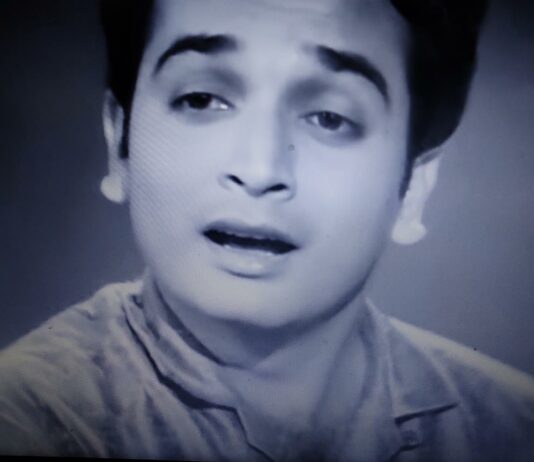
Some of my young friends, the millennials, tell me that they can’t connect with the lyrics and music of yesteryears. For some, the words are difficult to fathom and for others, the music is slow-paced. On top of that, a majority would avoid making connections with the era gone by.
My sense is that they are the ‘losers’, because they won’t know what they are missing. The remix versions are often in poor taste, the loud beats fail to carry tender lyrics. The core issue is that in the mad rush of modern living, emotions and sentiments have fleeting value. The vocabulary has shrunk, the language has degenerated, and the quest to go beyond comfort zones is waning.
While what lies ahead is anybody’s guess, that there is so much rich material to work with from the life we have already lived may have interesting insights. Indeed, that is the case.
The music composers were creating a new genre, adapting classical ragas to weave melodies for common consumption. Lot went into making them, the choice of words to flow with the emotions (situations) were backed by music that enhanced the overall impact. If you ask me, important for us will be to understand who these people were and how did they achieve such heights.
Remix is anything but ‘poor copy’ of the ‘original’. Further, each raga was given multiple treatments by different composers - so much creativity and innovation. Madan Mohan’s composition नैनों में बदरा छाए, बिजली सी चमके हाए and Shankar Jaikishan’s तुम्हें याद करते करते, जाएगी रैन सारी are both based on Raag Bhimpalasi.
But how different these two songs are?
In fact, there are several variants available on this raga which makes one wonder how imaginative the entire process may have been. Only by traveling into the depth of our own consciousness can we draw the true sense of these creations. आम्रपाली is a period film of a royal courtesan, set during the time of Buddha, in Vaishali.
If you ask me, आम्रपाली was made ahead of its time. It had its own class - costumes, locations, and music were exquisite. Some of the finest technicians of the time had teamed together to create this period drama. Its music and songs have lived uptil now, as fresh as these were, and are worth listening.
More important is to capture how musical instruments enhanced the value and meanings of words. Sitar is the lead instrument, as I understand, and its strings weave the words into a melodious poetry.
Try listening to it under dim lights somewhat late in the evening, preferably after 9 in the night. Mark my words, Such creations are hard to recreate..... https://m.youtube.com/watch?v=yIlCqg__Nvg--

Dr Sudhirendar Sharma
(सुधीरेन्द्र शर्मा मूलत: पत्रकार हैं किन्तु बहुमुखी प्रतिभा के स्वामी हैं। जेएनयू से पर्यावरण विज्ञान में पीएचडी तो बरसों पहले पूरी कर ली किन्तु कहते हैं कि “पर्यावरण को समझने अब लगा हूँ – वो भी संगीत के माध्यम से”! संगीत वैसे इन्हें बचपन से ही प्रिय है। फिल्म-संगीत में भी फ़िलॉसफी खोज लेते हैं। इस वेब-पत्रिका में फिल्म-संगीत में छिपी जीवन की गहरी बातों के बारे में आप मनोरंजन नामक केटेगरी में कई लेख पढ़ सकते हैं। पिछले कई वर्षों से गहन विषयों पर लिखी पुस्तकों के गंभीर समीक्षक के रूप में अपनी खासी पहचान बनाई है। इनकी लिखी समीक्षाएं विभिन्न पत्र-पत्रिकाओं में प्रकाशित होती रहती हैं जिन्हें वह अपने ब्लॉग में संकलित कर लेते हैं।)
Disclaimer: The views expressed in this article are the personal opinion of the author and do not reflect the views of raagdelhi.com, which does not assume any responsibility for the same.

We are trying to create a platform where our readers will find a place to have their say on the subjects ranging from socio-political to culture and society. We do have our own views on politics and society but we expect friends from all shades-from moderate left to moderate right-to join the conversation. However, our only expectation would be that our contributors should have an abiding faith in the Constitution and in its basic tenets like freedom of speech, secularism and equality. We hope that this platform will continue to evolve and will help us understand the challenges of our fast changing times better and our role in these times.
About us | Privacy Policy | Legal Disclaimer | Contact us | Advertise with us