Array ( [0] => Array ( [id] => 3839 [name] => हिंदी पत्रकारिता के 200 वर्षों की कलम, कर्म और क्रांति की कालजयी कथा [categoryId] => 17 [websiteUrlId] => 7535 [image] => [startDate] => 2026-05-30 [endDate] => 0000-00-00 [startTime] => [endTime] => [location] => [speaker] => [description] =>
आज अर्थात 30 मई को उदन्त मार्तंड की दो सौवीं जयंती पर हिंदी पत्रकारिता ने अपने दो सौ वर्ष पूरे कर लिए हैं। डॉ. शैलेश शुक्ला ने इस माह हिंदी पत्रकारिता के विभिन्न आयामों को कवर करते हुए इस वेब पत्रिका के लिए कुछ लेख लिखे हैं जिन्हें आप डॉ. शैलेश शुक्ला के नाम पर क्लिक करके पढ़ सकते हैं। कुछ अपवादों को अगर छोड़ दें तो 200 वर्षों की हिंदी पत्रकारिता का इतिहास गौरवपूर्ण ही रहा है जिसका ज़िक्र आप इस लेख में पढेंगे। इस सम्पादकीय टिप्पणी में यह ज़िक्र किया जा सकता है कि कुछ प्रेक्षकों का मानना है कि पिछले वर्षों में पत्रकारिता अपनी जड़ों से कुछ कट सी गई है और व्यावसायिक और राजनीतिक दबावों के चलते इसकी विश्वसनीयता, गहराई और संवेदनशीलता कुंद हो गई है। उम्मीद करनी चाहिए कि यह भी एक दौर है जो गुज़र जाएगा और सवाल पूछने वाली और पड़ताल करने वाली पत्रकारिता फिर लौटेगी।
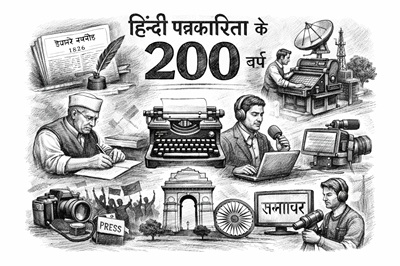
हिंदी पत्रकारिता के 200 वर्षों की कलम, कर्म और क्रांति की कालजयी कथा
डॉ. शैलेश शुक्ला
हिंदी पत्रकारिता का दो सौ वर्षों का इतिहास केवल समाचारों के प्रकाशन का इतिहास नहीं है, बल्कि यह भारतीय समाज की चेतना, राष्ट्रीय अस्मिता, सामाजिक परिवर्तन और जनजागरण का जीवंत इतिहास भी है। जब हिंदी पत्रकारिता का प्रारंभ हुआ, तब भारत राजनीतिक दासता, सामाजिक रूढ़ियों और भाषाई संघर्षों के दौर से गुजर रहा था। ऐसे समय में हिंदी भाषा में समाचार पत्र निकालना केवल साहित्यिक या व्यावसायिक कार्य नहीं था, बल्कि यह सांस्कृतिक और राष्ट्रीय जागरण का अभियान था। दो शताब्दियों की इस लंबी यात्रा में हिंदी पत्रकारिता ने अनेक महत्वपूर्ण उपलब्धियाँ अर्जित की हैं, जिन्होंने भारतीय समाज और लोकतंत्र को गहराई से प्रभावित किया है।
हिंदी पत्रकारिता की सबसे बड़ी उपलब्धि यह रही कि उसने हिंदी भाषा को जनभाषा से राष्ट्रव्यापी अभिव्यक्ति का माध्यम बनाने में अत्यंत महत्वपूर्ण भूमिका निभाई। जब हिंदी में पहला समाचार पत्र प्रकाशित हुआ, उस समय हिंदी को न तो प्रशासनिक प्रतिष्ठा प्राप्त थी और न ही शिक्षित वर्ग में उसे पर्याप्त सम्मान प्राप्त था। हिंदी पत्रकारिता ने भाषा को केवल साहित्यिक अभिव्यक्ति तक सीमित नहीं रखा, बल्कि उसे सामाजिक संवाद, राजनीतिक विचार और जनचेतना का माध्यम बनाया। धीरे-धीरे हिंदी समाचार पत्रों ने गांवों, कस्बों और नगरों तक पहुंच बनाकर हिंदी को करोड़ों लोगों की साझा भाषा के रूप में स्थापित किया। यह उपलब्धि केवल भाषाई नहीं, बल्कि सांस्कृतिक एकता की दृष्टि से भी अत्यंत महत्वपूर्ण थी।
राष्ट्रीय चेतना के निर्माण में हिंदी पत्रकारिता का योगदान उसकी सबसे गौरवपूर्ण उपलब्धियों में गिना जाता है। स्वतंत्रता आंदोलन के समय हिंदी समाचार पत्रों और पत्रिकाओं ने ब्रिटिश शासन के दमन, अन्याय और शोषण के विरुद्ध जनता को जागरूक किया। उस दौर में समाचार पत्र केवल घटनाओं का विवरण नहीं देते थे, बल्कि वे स्वतंत्रता की भावना को जन-जन तक पहुंचाने का कार्य करते थे। अनेक पत्र-पत्रिकाओं ने अत्यंत कठिन परिस्थितियों में भी सत्य और राष्ट्रहित की आवाज उठाई। कई संपादकों और पत्रकारों ने कारावास झेला, आर्थिक संकटों का सामना किया और अपने प्रकाशनों पर प्रतिबंध सहन किए, फिर भी वे पीछे नहीं हटे। हिंदी पत्रकारिता ने स्वतंत्रता आंदोलन को वैचारिक शक्ति प्रदान की और जनता को संगठित करने में महत्वपूर्ण भूमिका निभाई।
सामाजिक सुधार आंदोलनों को जनसमर्थन दिलाने में भी हिंदी पत्रकारिता की भूमिका अत्यंत उल्लेखनीय रही है। समाज में व्याप्त कुरीतियों, अस्पृश्यता, बाल विवाह, दहेज प्रथा और स्त्री शिक्षा जैसे विषयों पर हिंदी पत्र-पत्रिकाओं ने गंभीर चर्चा आरंभ की। उन्होंने सामाजिक चेतना को जागृत करते हुए सुधारवादी विचारों को व्यापक समाज तक पहुंचाया। विशेष रूप से महिलाओं की शिक्षा, उनके अधिकारों और सामाजिक सम्मान के प्रश्नों को हिंदी पत्रकारिता ने लगातार उठाया। परिणामस्वरूप समाज में धीरे-धीरे परिवर्तन की प्रक्रिया प्रारंभ हुई। यह उपलब्धि इस दृष्टि से महत्वपूर्ण है कि पत्रकारिता ने केवल सूचना देने का कार्य नहीं किया, बल्कि समाज के नैतिक और मानवीय विकास में भी सक्रिय भूमिका निभाई।
हिंदी पत्रकारिता की एक अन्य महत्वपूर्ण उपलब्धि लोकतांत्रिक मूल्यों को मजबूत करना है। स्वतंत्रता प्राप्ति के बाद हिंदी समाचार पत्रों ने लोकतंत्र की जड़ों को मजबूत करने में महत्वपूर्ण भूमिका निभाई। उन्होंने शासन और प्रशासन की नीतियों पर निरंतर निगरानी रखी, जनता की समस्याओं को सामने लाया और जनमत निर्माण का कार्य किया। लोकतंत्र में स्वतंत्र पत्रकारिता को चौथा स्तंभ कहा जाता है और हिंदी पत्रकारिता ने इस भूमिका को गंभीरता से निभाया। ग्रामीण क्षेत्रों से लेकर राष्ट्रीय स्तर तक जनता की आवाज को मंच प्रदान करना हिंदी पत्रकारिता की बड़ी उपलब्धि रही है। इससे लोकतंत्र केवल चुनावों तक सीमित न रहकर जनसहभागिता का माध्यम बना।
ग्रामीण भारत को राष्ट्रीय विमर्श से जोड़ना भी हिंदी पत्रकारिता की ऐतिहासिक उपलब्धियों में सम्मिलित है। लंबे समय तक मुख्यधारा की सूचनाओं में ग्रामीण क्षेत्रों की समस्याओं और आवश्यकताओं को पर्याप्त स्थान नहीं मिलता था। हिंदी पत्रकारिता ने गांवों की समस्याओं, किसानों की स्थिति, कृषि संकट, शिक्षा, स्वास्थ्य और स्थानीय प्रशासन से जुड़े मुद्दों को प्रमुखता से उठाया। इससे ग्रामीण भारत की आवाज राष्ट्रीय स्तर तक पहुंची। हिंदी समाचार पत्रों ने गांवों के पाठकों को केवल सूचना ही नहीं दी, बल्कि उन्हें सामाजिक और राजनीतिक रूप से जागरूक भी बनाया।
हिंदी साहित्य और पत्रकारिता के बीच सेतु निर्माण भी हिंदी पत्रकारिता की महत्वपूर्ण उपलब्धियों में गिना जाता है। हिंदी की अनेक प्रतिष्ठित पत्रिकाओं ने साहित्यकारों, कवियों और विचारकों को मंच प्रदान किया। अनेक महान साहित्यकार पत्रकारिता से जुड़े रहे और उन्होंने अपनी लेखनी के माध्यम से समाज को दिशा देने का कार्य किया। साहित्यिक पत्रिकाओं ने नई प्रतिभाओं को अवसर दिया, जिससे हिंदी साहित्य का विकास हुआ। इस प्रकार हिंदी पत्रकारिता केवल समाचारों तक सीमित नहीं रही, बल्कि उसने भारतीय साहित्य और संस्कृति के संरक्षण तथा संवर्धन में भी महत्त्वपूर्ण योगदान दिया।
शिक्षा और जनजागरण के क्षेत्र में हिंदी पत्रकारिता की भूमिका अत्यंत महत्वपूर्ण रही है। हिंदी समाचार पत्रों और पत्रिकाओं ने सामान्य जन को राष्ट्रीय और अंतरराष्ट्रीय घटनाओं से परिचित कराया। विज्ञान, कृषि, स्वास्थ्य, अर्थव्यवस्था और तकनीक जैसे विषयों पर सरल भाषा में सामग्री उपलब्ध कराकर उन्होंने ज्ञान के प्रसार में महत्वपूर्ण भूमिका निभाई। विशेष रूप से ऐसे समय में जब शिक्षा का प्रसार सीमित था, समाचार पत्र समाज के लिए अनौपचारिक शिक्षा के प्रमुख माध्यम बने। इससे लोगों में जागरूकता और बौद्धिक विकास की प्रक्रिया को गति मिली।
तकनीकी परिवर्तन के साथ स्वयं को अनुकूलित करना भी हिंदी पत्रकारिता की बड़ी उपलब्धि है। मुद्रण यंत्रों से प्रारंभ हुई यह यात्रा आज डिजिटल मंचों तक पहुंच चुकी है। हिंदी पत्रकारिता ने समय के साथ नई तकनीकों को अपनाया और अपने स्वरूप को परिवर्तित किया। आज हिंदी समाचार पत्र केवल कागज तक सीमित नहीं हैं, बल्कि वे डिजिटल माध्यमों, दूरदर्शन, श्रव्य-दृश्य मंचों और सामाजिक संचार माध्यमों पर भी सक्रिय हैं। इससे हिंदी पत्रकारिता की पहुंच विश्वव्यापी हुई है। विदेशों में रहने वाले हिंदी भाषी समुदाय तक भी हिंदी समाचार और विचार पहुंचने लगे हैं। यह उपलब्धि हिंदी भाषा के वैश्विक विस्तार की दृष्टि से अत्यंत महत्वपूर्ण है।
हिंदी पत्रकारिता ने संकट के समय समाज को दिशा देने का कार्य भी किया है। प्राकृतिक आपदाओं, महामारी, युद्ध और सामाजिक तनाव की परिस्थितियों में हिंदी समाचार माध्यमों ने जनता तक आवश्यक जानकारी पहुंचाने और जनसहयोग को प्रोत्साहित करने में महत्वपूर्ण भूमिका निभाई। विशेष रूप से महामारी के दौर में हिंदी पत्रकारिता ने स्वास्थ्य संबंधी जानकारी, सरकारी निर्देश और सामाजिक जागरूकता फैलाने का कार्य किया। इससे यह स्पष्ट हुआ कि पत्रकारिता केवल समाचार उद्योग नहीं, बल्कि सामाजिक उत्तरदायित्व का माध्यम भी है।
भ्रष्टाचार और प्रशासनिक अनियमितताओं को उजागर करने में भी हिंदी पत्रकारिता की भूमिका उल्लेखनीय रही है। अनेक खोजी रिपोर्टों ने प्रशासनिक भ्रष्टाचार, सामाजिक अन्याय और आर्थिक अनियमितताओं को सामने लाकर जनचेतना को जागृत किया। इससे शासन व्यवस्था में उत्तरदायित्व और पारदर्शिता की भावना को बल मिला। लोकतांत्रिक समाज में यह पत्रकारिता की अत्यंत महत्वपूर्ण उपलब्धि मानी जाती है।
हिंदी पत्रकारिता की सबसे बड़ी विशेषता उसकी जनसरोकारों से जुड़ी संवेदनशीलता रही है। उसने केवल अभिजात वर्ग की समस्याओं को नहीं, बल्कि समाज के वंचित, श्रमिक, किसान और कमजोर वर्गों की आवाज को भी प्रमुखता दी। इससे पत्रकारिता अधिक समावेशी और जनोन्मुख बनी। हिंदी पत्रकारिता ने समाज के विविध वर्गों को अभिव्यक्ति का मंच प्रदान किया, जो उसकी लोकतांत्रिक प्रतिबद्धता का प्रमाण है।
आज जब हिंदी पत्रकारिता अपने दो सौ वर्षों की यात्रा पूर्ण कर चुकी है, तब यह स्पष्ट दिखाई देता है कि उसकी उपलब्धियाँ केवल संस्थागत नहीं हैं, बल्कि वे भारतीय समाज की चेतना और विकास से गहराई से जुड़ी हुई हैं। इन दो शताब्दियों में हिंदी पत्रकारिता ने भाषा को प्रतिष्ठा दी, स्वतंत्रता आंदोलन को शक्ति दी, लोकतंत्र को मजबूत किया, सामाजिक सुधारों को गति दी और जनसाधारण को जागरूक बनाने का कार्य किया। यह यात्रा संघर्षों, चुनौतियों और निरंतर परिवर्तन की यात्रा रही है, परंतु इसके मूल में सदैव समाज और राष्ट्र के प्रति उत्तरदायित्व की भावना रही है।
भविष्य की दृष्टि से भी हिंदी पत्रकारिता की भूमिका अत्यंत महत्वपूर्ण बनी रहेगी। सूचना क्रांति और तकनीकी परिवर्तन के इस युग में चुनौतियां अवश्य बढ़ी हैं, परंतु अवसर भी व्यापक हुए हैं। यदि हिंदी पत्रकारिता अपनी विश्वसनीयता, निष्पक्षता और जनसरोकारों के प्रति प्रतिबद्धता को बनाए रखती है, तो आने वाले समय में भी वह समाज को दिशा देने में महत्वपूर्ण भूमिका निभाती रहेगी। दो सौ वर्षों की यह गौरवपूर्ण यात्रा न केवल अतीत की उपलब्धियों का स्मरण है, बल्कि भविष्य की संभावनाओं का भी प्रेरणास्रोत है।
***********

डॉ. शैलेश शुक्ला | Dr. Shailesh Shukla
वैश्विक समूह संपादक, सृजन संसार अंतरराष्ट्रीय पत्रिका समूह | Global Group Editor, Srijan Sansar Group of International Journals
सलाहकार संपादक, नईदुनिया एवं गौड़सन्स टाइम्स | Consulting Editor, NaiDunia & GaurSons Times
आशियाना, लखनऊ - 226012, उत्तर प्रदेश | Ashiyana, Lucknow – 226012, Uttar Pradesh
मो.| Mob.: 9312053330, 8759411563
[metaTitle] => हिंदी पत्रकारिता के 200 वर्षों की कलम, कर्म और क्रांति की कालजयी कथा [metaKeyword] => डॉ शैलेश शुक्ला, उदन्त मार्तंड के 200 वर्ष, 200 वर्षों की हिंदी पत्रकारिता, हिंदी में पहला समाचार पत्र [metaDescription] => हिंदी पत्रकारिता के 200 वर्षों की कलम, कर्म और क्रांति की कालजयी कथा. आज अर्थात 30 मई को हिंदी पत्रकारिता ने अपने दो सौ वर्ष पूरे कर लिए हैं। [homeStatus] => 1 [status] => 1 [sortOrder] => 4 [timeStamp] => 2026-06-06 18:12:28 [source] => [type] => 1 [altText] => हिंदी पत्रकारिता के 200 वर्षों की कलम, कर्म और क्रांति की कालजयी कथा [imageTitleText] => हिंदी पत्रकारिता के 200 वर्षों की कलम, कर्म और क्रांति की कालजयी कथा [externalUrl] => [author] => 140 [shortDescription] =>
आज अर्थात 30 मई को हिंदी पत्रकारिता ने अपने दो सौ वर्ष पूरे कर लिए हैं। डॉ शैलेश शुक्ला ने इस माह हिंदी पत्रकारिता के विभिन्न आयामों को कवर करते हुए इस वेब पत्रिका के लिए कुछ लेख लिखे हैं. कुछ अपवादों को अगर छोड़ दें तो 200 वर्षों की हिंदी पत्रकारिता का इतिहास गौरवपूर्ण ही रहा है. इस सम्पादकीय टिप्पणी में यह ज़िक्र किया जा सकता है कि कुछ प्रेक्षकों का मानना है कि पिछले वर्षों में पत्रकारिता अपनी जड़ों से कुछ कट सी गई है और व्यावसायिक और राजनीतिक दबावों के चलते इसकी विश्वसनीयता, गहराई और संवेदनशीलता कुंद हो गई है। उम्मीद करनी चाहिए कि यह भी एक दौर है जो गुज़र जाएगा और सवाल पूछने वाली और पड़ताल करने वाली पत्रकारिता फिर लौटेगी।
[videoId] => [hits] => 92 [externalImage] => [externalDescription] => [fileId] => 4978 [MayAlsoRead] => 0 ) [1] => Array ( [id] => 3840 [name] => The 70-Year Record of Bombing, Bullying, and Calling It Order [categoryId] => 2 [websiteUrlId] => 7540 [image] => [startDate] => 2026-05-30 [endDate] => 0000-00-00 [startTime] => [endTime] => [location] => [speaker] => [description] =>Donald Trump’s threat to “blow up Oman” was vintage Trump—provocative, outrageous, yet hardly surprising. The remark drew global condemnation, but Amandeep Midha places it in a wider frame: the West’s seventy-year habit of dropping bombs at will while preaching a “rules-based international order.” Trump’s bluntness may have shocked, but the pattern long predates him. In his latest essay, Midha traces this continuity of violence and impunity, showing how one sentence at a Cabinet meeting revealed the true operating logic of Western power.
"Or We Have to Blow Them Up?"
The West's Seventy-Year Record of Bombing, Bullying, and Calling It Order
Amandeep Midha
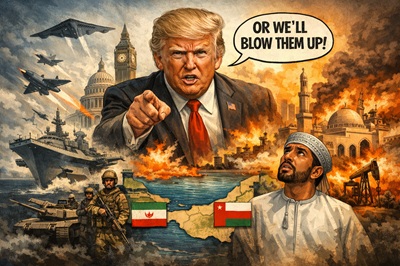
There is a sentence that deserves to hang above the entrance to every Western foreign policy seminar, every transatlantic summit communiqué, every lecture hall where a professor opens with the phrase "rules-based international order." It was spoken not in some Cold War basement, not by a defence contractor pitching the Pentagon, but by the sitting President of the United States, Donald Trump, at a White House Cabinet meeting on May 27, 2026. A reporter asked whether Washington would accept a deal allowing Iran and Oman to jointly control the Strait of Hormuz. The most powerful man on earth replied: "Oman will behave just like everybody else, or we'll have to blow them up. They understand that. They'll be fine."
Not threatened. Not sanctioned. Not negotiated. Blow them up.
The target was Oman: A decades-long American ally, the quiet diplomatic back-channel through which Washington and Tehran have communicated for years, the country without which US-Iran nuclear talks would not have been possible. A state that did nothing except occupy geography inconvenient to American strategic appetites. It did not matter. The logic applied regardless: comply, or face destruction.
Iran's foreign ministry called it "another dangerous sign of the normalization of lawlessness and bullying in international relations." One does not have to admire the Iranian government to recognise when it has correctly named something.
Strip away the Atlantic Charter sentimentality, and this is what remains, the operating logic of Western power, reduced to its honest core. They dressed it in legal Latin for seven decades. On May 27, 2026, a sitting president simply forgot to lower his voice.
This is not a column about Donald Trump. It is a column about the world his sentence describes, and has described, accurately, since 1945.
The Arithmetic of Violence
The United States has conducted nearly 400 military interventions since 1776, roughly one every seven months. More than a quarter took place after the Cold War ended in 1991, after the ideological rationale of containing Soviet communism had dissolved and nothing remained as justification except appetite.
The post-9/11 wars alone killed an estimated 940,000 people through direct violence, of whom more than 432,000 were civilians. Brown University's Costs of War project places the indirect toll, from destroyed healthcare systems, economies, and infrastructure, at 3.6 to 3.8 million, bringing the total to at least 4.5 million dead, and counting.
That is not a foreign policy record. That is a civilisational audit.
The Architecture of Impunity
What sustains this system is not military superiority alone. It is the institutional architecture constructed to insulate Western power from accountability.
The United States has not ratified the Rome Statute of the International Criminal Court. When the ICC sought to investigate American actions in Afghanistan, the Trump administration sanctioned its prosecutors. The UN Security Council veto has been deployed by the US more than any other permanent member, most consistently to shield allies from accountability and to prevent multilateral constraint on American operations. The very institution designed to enforce international law has been blocked from functioning, from inside, by its architect.
The rules-based order was never designed to apply universally. It was designed to codify the hierarchy to give Western dominance the appearance of principle while preserving its operational freedom.
The Gaza Mirror
When Russia invaded Ukraine in 2022, Western institutions mobilised with extraordinary speed. The ICC issued arrest warrants. Sanctions cascades were executed within days. European leaders competed to demonstrate moral clarity.
The Global South asked a reasonable question: Will this framework apply consistently?
The answer arrived in Gaza. An Israeli bombardment that killed over 50,000 Palestinians drew not ICC warrants from Washington but weapons deliveries, not legal accountability but vetoes of ceasefire resolutions. Western governments that had invoked sovereignty and international humanitarian law with operatic intensity for Ukraine reduced those same principles to "mere footnotes and suggestions."
The rules apply to adversaries. They do not apply to allies. They are not law. They are leverages.
The Strategic Consequence
The consequence of this record is not merely moral. It is strategic, and it is accelerating.
The Global South has watched the Ukraine-Gaza contrast and drawn the obvious inference: Western institutions are tools of Western interest, not universal law. This is driving BRICS expansion, bilateral currency arrangements, and the fracturing of multilateral consensus on climate, trade, and security. A world in which the United States has conducted 400 interventions, killed millions of civilians, ignored international court rulings, and vetoed accountability for its allies, and then expressed bewilderment that the non-Western world declines to treat it as a neutral arbiter, is not suffering from a communication problem. It is confronting the consequences of a structural legitimacy deficit, decades in the making, now coming due.
Trump's sentence is useful not because it is shocking, but because it is honest. That the target was Oman, a US ally, a diplomatic interlocutor that had done nothing except exist at the wrong latitude, is not incidental. That is the point. The threat was not really about Iran. It was about whether any nation in that region retains the sovereign right to its own foreign policy. The answer, from a Cabinet meeting in Washington, was unambiguous: no.
The order was never as rules-based as advertised. The only question now is what replaces it and whether those who inherit the ruins will do better, or simply repeat the cycle with different coordinates.
****************

Amandeep Midha is a technologist, writer, and global speaker with over two decades of experience in digital platforms building, data streaming, and digital transformation. He has contributed thought leadership to Forbes, World Economic Forum, Horasis, and CSR Times, and actively engages in technology policy-making discussions. Based in Copenhagen, Amandeep blends deep technical expertise with a passion for social impact and storytelling.
[metaTitle] => The West's 70-Year Record of Bombing, Bullying, and Calling It Order [metaKeyword] => Amandeep Midha, Hegemony of the West, Oman, We will blow them up, Iran US War, [metaDescription] => The West's 70-Year Record of Bombing, Bullying, and Calling It Order [homeStatus] => 1 [status] => 1 [sortOrder] => 3 [timeStamp] => 2026-06-06 12:18:02 [source] => [type] => 1 [altText] => The West's Seventy-Year Record of Bombing, Bullying, and Calling It Order [imageTitleText] => The West's Seventy-Year Record of Bombing, Bullying, and Calling It Order [externalUrl] => [author] => 134 [shortDescription] =>Donald Trump’s threat to “blow up Oman” was vintage Trump—provocative, outrageous, yet hardly surprising. The remark drew global condemnation, but Amandeep Midha places it in a wider frame: the West’s seventy-year habit of dropping bombs at will while preaching a “rules-based international order.” Trump’s bluntness may have shocked, but the pattern long predates him. In his latest essay, Midha traces this continuity of violence and impunity, showing how one sentence at a Cabinet meeting revealed the true operating logic of Western power.
[videoId] => [hits] => 80 [externalImage] => [externalDescription] => [fileId] => 4979 [MayAlsoRead] => 0 ) [2] => Array ( [id] => 3841 [name] => The Burden of Control — Frank Noronha Reflects [categoryId] => 10 [websiteUrlId] => 7553 [image] => [startDate] => 2026-06-01 [endDate] => 0000-00-00 [startTime] => [endTime] => [location] => [speaker] => [description] =>Over the past weeks, readers of Raag Delhi have encountered Frank Noronha’s quietly luminous reflections — essays that turn ordinary experiences into meditations on awareness. His latest piece, The Burden of Control, continues this inward journey with a rare philosophical rhythm. In lucid, introspective prose, Noronha leads the reader into unseen corners of the self, revealing how the mind’s constant urge to control life becomes the hidden architect of disturbance. Yet, through this exploration, he gestures toward a gentler truth — that peace may arise not from mastery, but from surrender.
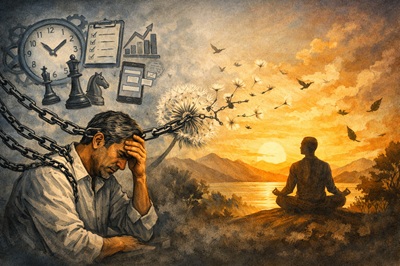
The Burden of Control — Frank Noronha Reflects
Frank Noronha
As I grow older, I notice something operating within me almost constantly — the urge to control life.
Not only the major things. Even the smallest things.
I want conversations to go a certain way. I want people to respond according to my expectations. I want situations to unfold smoothly. I want health, relationships, family matters, and even my inner life to move according to some invisible script I carry within me.
And when they do not, disturbance begins.
What is this strange movement within us that constantly wants life to obey us?
I have watched this carefully in myself. The instinct to control is so automatic that most of the time it goes unnoticed. It appears almost like a survival mechanism. One part of the mind says:
“If you do not control things, everything will fall apart.”
And perhaps, at a practical level, some control is necessary. Human life requires responsibility. We must make decisions, organise, plan, and act intelligently.
But psychologically, the movement goes much deeper.
The mind wants certainty.
It wants guarantees.
It wants tomorrow secured before tomorrow arrives.
And this is where suffering quietly enters.
Because life repeatedly refuses to cooperate fully with our plans.
Even when we do our best, things still go wrong. Bodies fall sick. Relationships change. Misunderstandings happen. Carefully made plans collapse overnight. People we love disappear from our lives without warning.
Yet the urge to control continues.
So what is one supposed to do?
Should one stop caring altogether?
Should one become passive and indifferent?
That too seems false.
Perhaps the real issue is not action itself, but the inward demand that life must unfold according to our psychological expectations.
I notice this very clearly in the movement of thought.
Thoughts arise continuously within me, and my emotional state seems deeply connected to them. When hopeful thoughts appear, there is enthusiasm and lightness. When fearful thoughts arise, there is anxiety, resentment, comparison, fear of loss, and a sense of scarcity.
The quality of thought shapes the quality of feeling.
But then another question arises:
Do I actually control the thoughts that appear?
If I am honest, I do not think I do.
Thoughts simply come.
One moment the mind is peaceful. The next moment it is occupied by fear. One memory suddenly appears and sadness enters. One image about the future arises and anxiety tightens the body.
Thought seems to have a life of its own.
And what is remarkable is how quickly identification happens. The moment a thought appears, there is an immediate feeling:
“This is happening to me.”
But who exactly is this “me”?
A name?
A body?
A collection of memories and experiences?
I do not fully know.
Perhaps much of human life is this continuous movement between thought, emotion, memory, and reaction. A constant attempt to manage inner and outer uncertainty.
Modern life only intensifies this condition. Every day we are flooded with news, opinions, fears, desires, comparisons, and endless information. Events happening thousands of miles away affect our mood, our fears, even our sense of security. Human consciousness has become deeply entangled with mental noise.
And slowly one begins to see that much of life is not being lived directly. It is being lived through interpretation.
Even spirituality can become another interpretation.
Many teachings say that thoughts arise from awareness and disappear back into awareness. They say our true nature is not the thoughts themselves but the silent presence in which thoughts appear.
Intellectually, this sounds beautiful.
But understanding it as an idea is very different from actually living it.
In daily life I remain deeply identified with thoughts, emotions, memories, and external events. Praise affects me. Criticism affects me. Hope lifts me. Uncertainty disturbs me.
The identification is immediate.
Yet occasionally there are moments when something else becomes visible.
A thought arises — and instead of immediately becoming trapped inside it, there is simple observation.
Fear appears — and it is seen.
Anxiety moves through the mind — and it too is seen.
In such moments there is a certain quietness.
Not because all problems disappear.
Not because certainty has been achieved.
But because for a brief moment thought is no longer completely dominating consciousness.
Perhaps peace is not the result of finally controlling life.
Perhaps peace begins when one sees clearly that life cannot be fully controlled.
There is humility in that realization.
A softer way of living.
Doing what one can practically, while inwardly loosening the constant struggle to force life into psychological order.
Not resignation.
Not passivity.
Just a quieter participation in the unfolding of life.

Frank Noronha IIS ( Indian Information Service) is a retired Principal Director General, Press Information Bureau, Government of India, compiler of two volumes of interviews with philosopher U.G. Krishnamurti, and Managing Trustee of a charitable trust in Bengaluru supporting underprivileged children.
[metaTitle] => The Burden of Control — Frank Noronha Reflects [metaKeyword] => Frank Noronha, The Burden of Control, Frank Noronha Reflects, controlling the thoughts, U.G. Krishnamurti [metaDescription] => The Burden of Control — Frank Noronha Reflects. This essay carries a quiet philosophical rhythm and an introspective form. [homeStatus] => 1 [status] => 1 [sortOrder] => 2 [timeStamp] => 2026-06-06 18:29:29 [source] => [type] => 1 [altText] => The Burden of Control — Frank Noronha Reflects [imageTitleText] => The Burden of Control — Frank Noronha Reflects [externalUrl] => [author] => 144 [shortDescription] =>Over the past weeks, readers of Raag Delhi have encountered Frank Noronha’s quietly luminous reflections — essays that turn ordinary experiences into meditations on awareness. His latest piece, The Burden of Control, continues this inward journey with a rare philosophical rhythm. In lucid, introspective prose, Noronha leads the reader into unseen corners of the self, revealing how the mind’s constant urge to control life becomes the hidden architect of disturbance. Yet, through this exploration, he gestures toward a gentler truth — that peace may arise not from mastery, but from surrender.
[videoId] => [hits] => 68 [externalImage] => [externalDescription] => [fileId] => 4983 [MayAlsoRead] => 0 ) )
We are trying to create a platform where our readers will find a place to have their say on the subjects ranging from socio-political to culture and society. We do have our own views on politics and society but we expect friends from all shades-from moderate left to moderate right-to join the conversation. However, our only expectation would be that our contributors should have an abiding faith in the Constitution and in its basic tenets like freedom of speech, secularism and equality. We hope that this platform will continue to evolve and will help us understand the challenges of our fast changing times better and our role in these times.
About us | Privacy Policy | Legal Disclaimer | Contact us | Advertise with us