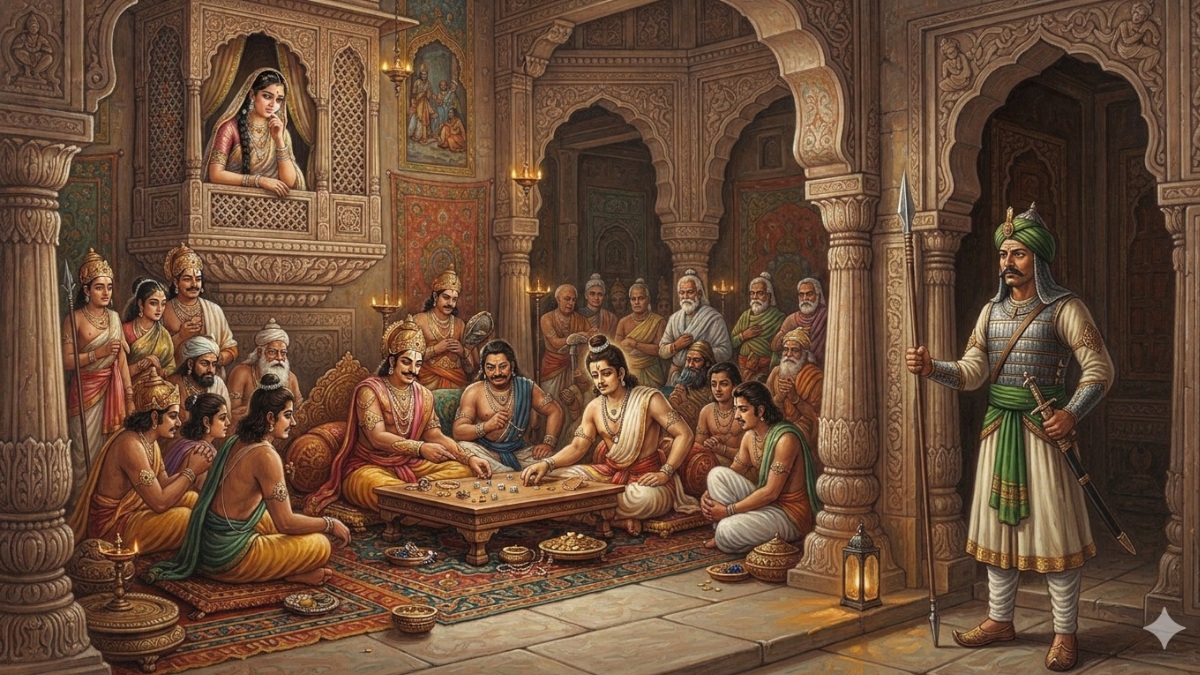
After his powerful story, ‘The Guard at the Door: Revisiting the Mahabharata’, published a few weeks ago, Dr Sandeep Bhatnagar returns with another compelling tale rich in human emotions. The story raises an intriguing ethical question and offers a thoughtful resolution to the dilemma it explores.
The Finish Line: An Interview in Reverse
Dr Sandeep Bhatnagar
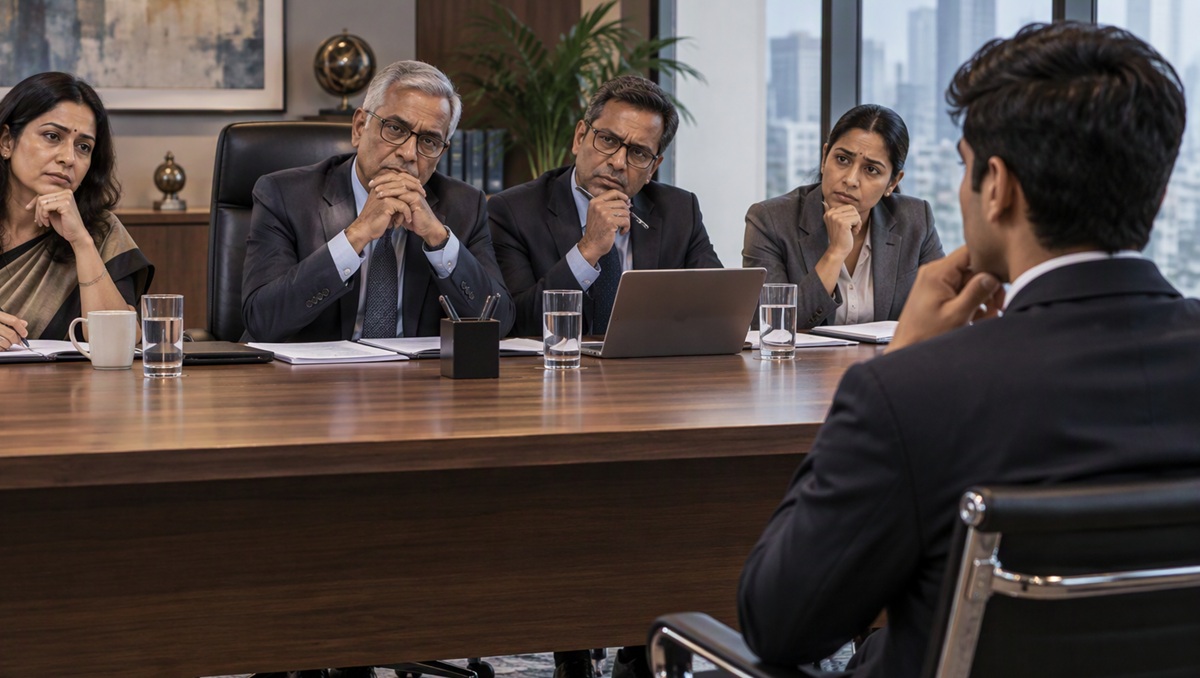
The boardroom is quiet. The Chairman and two members are sitting. In the qualifying race of twelve rounds yesterday, there was an incident where the person leading the race for eleven rounds, Shyam, fell. The runner next to him, Ravi, initially overtook him, then turned back, held and supported Shyam to walk, and led him to the finish line to win the race. An extraordinary meeting has been called for an interview pertaining to that qualifying race for the job in the company.
Ravi, age 25, was sitting outside the meeting hall, thinking, “Was I right? I still don't know. Some nights, I see Shyam's face, and I think, of course, I should have turned back. Other nights, I see my father's face, the unpaid instalments, my sister's postponed admission, my mother's bare wrists, and that I was foolish to have handed away my family's future for a stranger's ankle. My sister says moral convictions are admirable only when others bear their consequences. Both voices are honest. That is what is troubling. If I could prove the choice was right, it would be easy. But I can't. The clock says I lost. My conscience says I won.
And yet, if I stood at that bend again, what would I do? It was a decision in that moment, neither premeditated nor calculated on compassion or anything. I cannot justify or explain either walking him to the finish line or walking away. But this rethinking makes it even harder. So let the doubt stay. Let it sit beside me, like Shyam's weight on my shoulder. I will carry both.
Ravi was called in. Now he is sitting across the table, wearing the fatigue from yesterday's endurance round on his face.
First Interviewer: So, Ravi, it is nice to have you here today. I remember yesterday in the last leg of the endurance test, you were one of the fastest, but Shyam was ahead of you. And you stopped to help him when he fell. Not only that, but you also ran slowly with him and let him cross the finish line first. Can you tell me what happened, exactly?
Ravi: Yes, Sir. I was running at good speed and had a fair chance to make it in the twelve rounds. I was ahead of everyone except Shyam. He was in front of me by some ten meters for all eleven rounds. But he was thrown down heavily towards the final bend. His ankle gave way, and he fell on the gravel. To be honest with you, Sir, I did not stop at the immediate instant. I looked at him and then at the finish line and ran past him. About fifteen steps. Maybe twenty.
Second Interviewer: What happened after the 20 steps?
Ravi: I was thinking all about the job. My wedding plans. The expenses for my father's health care. That it was my third try to enter the service in two years. I initially thought, he is down; I am ahead now; this is my chance. Nobody would blame me. Then I don’t know what happened. At the spur of the moment, I turned back and helped him. It was spontaneous to the extent that I did not evaluate any action. Maybe I thought I might end up blaming myself for not helping someone who needed it. And then I got support for each thought: winning the race- being a bad person; qualifying for the job -not being human enough, etc. The second thought seemed to have won, but it had to run 20 steps to reach me.
I clutched the job for twenty steps - the pay, my father's medicines, mother’s needs, sister’s education and my marriage. My legs were running, and my mind was already at the finish line. Then I retreated.
Chairman: Sounds like hindsight wisdom - a post hoc lesson!
Ravi: Sir, I'm not like a saint who would take the road of compassion before the race could start. I always wanted to win, but it just happened.
Chairman: I don't want you to give me a slogan. Was it a good or bad thing?
Ravi: Sir, now that it is over, I can actually evaluate it. I think as far as a stopwatch is concerned, kindness is the same as foolishness. Shyam fell, and it turned into two different races. One was on the track; time was of the essence. The other was in me, and every minute I was asking myself, “What kind of person are you?” According to the job description, we may be the first to contact someone who is in trouble. So, if I can't stop for a man 10 metres from the finish, what am I qualified to do if it's a stranger and the stakes are higher?
Second Interviewer: It's the swift who rule the world. Is not your pity a revolution against the way things are? Why should anybody cross before us? Did you think you would get applause?
Ravi: It may be. But we are taught that in every religion its founder is one who halted for the fallen. And whether we remember it or not, the core remains within. As for Shyam, he told me to leave him and save my chance. He picked up a bit of power toward the finish and took a step forward. I might have passed him, but I didn't. He had led for eleven rounds! I would have been taking what isn't mine if I crossed first. He would have won, had the race been of eleven rounds only. I had to carry him as he was very heavy with pain. But I didn't carry him so that I could come back and say I carried him. No, I didn't ask for any exception. I expected consequences. Though it would be less painful to hear applause.
First Interviewer: Can you please walk us through your background and why this job?
Ravi: I was born in a small town, where there were two futures. Leave or stay and struggle. My dad is a cycle mechanic. My mother is a housewife but occasionally does a tiffin service. My sister is studying. We never went without food, but we always counted. In school, I was the boy with the twice-mended shoes. Running wasn't something that was going to cost me anything, so I learned to run. It was the only place where I mattered as me only.
First Interviewer: And yesterday, you gave up that finish line.
Ravi: Which is weird, because it was running that was the only thing where I counted. But Shyam is also somebody's son. He told me before the race that this was his last attempt. For the preparation for jobs, his family has pawned their gold as well. I think I saw my father's face when he was down. This was something I couldn't cross.
First Interviewer: What impact does this job loss have on your family?
Ravi: I think it is the one thing that has got me. My mother worked late to pay for my expenses. My sister has delayed going to college. There are some debts we don't talk about at supper. This was the opportunity to restore dignity to my family.
First Interviewer: So, you placed your family at risk for someone you didn't know. Maybe you were selfish in a different manner.
Ravi: Sir, I can't say that my decision was noble. But had I or my father fallen on that track, I would've wished somebody would stop for him. I can't ask for empathy on behalf of my family and insist that it is out of budget when a different family needs it.
Sir, after the race, I had called my father and told him all about it, including the part where I walked past Shyam. I was expecting him to be angry. He was silent for quite a while. Then he said, “When a tyre goes flat on the road, it does not ask the owner whether he can pay for it. So is true for us; we just repair it”. My mother did cry initially when she got to know the result. Then she asked me if Shyam had reached the finish line, and when I said yes, she said, “Good. At least someone made it home with a chance”. My sister wasn't so forgiving. She had said, "Bhaiya, it is easy to hold on to principles when someone else pays for it”. Her contention was correct. No straight response was possible for that.
Chairman: That is emotionally persuasive, but does it pay medical bills?
Ravi: No, sir. Compassion cannot pay bills, and it is not a guarantee of a job either. I may have made a pricey choice. I am willing to pay the price, rather than spend years coming up with excuses for something I would have no justification to explain. I am not sure about that moment, but now I would prefer to face the repercussions that are connected to one hard decision.
First Interviewer: Is there anyone else in your life apart from your family?
Ravi: There's Meera. It has been three years since we got together. She is a teacher at an elementary school. Her parents would not approve of the marriage until there was stability in my job. That was our future. She was upset initially when I told her what happened. She had said that the whole world was hoping I would do well, and I had picked a man off a track instead. I told her that I haven't selected Shyam over her. I just made the decision not to give up on him.
Second Interviewer: And then?
Ravi: She is a soulmate, Sir. She said she was afraid that I would stop, and she was more afraid that I would not. She seemed to have laughed her tears off. The man she loved had given back a stranger's wallet with all the cash still in there. Men aiming for success refrain from such an act. I told her that nobody would get to know what I did. She said she did notice. And that was enough for both of us.
First Interviewer: Will you feel bad if you lose this selection? Your father's medicine? Your marriage?
Ravi: I will miss it, but I have no regrets about the choice.
First Interviewer: On the track, did Shyam say anything to you?
Ravi: Only one thing. He did say that I could have gone. I held his shoulder tight, and he clung a little more. I think we both knew the truth.
Second Interviewer: Last question, Ravi? What happens if this panel determines that you are not appropriate?
Ravi: I will go home and assist my father at the shop and apply again in the next batch. I will train harder, but if there's a job that requires me to be someone who rushes by a man who's down, I may not take it. Though delayed, this is a resolution now. If it occurs again, I will do the same again, and again. As you know, we repair the tyres.
Chairman: OK, Ravi. You can leave, and we can meet post-lunch again here.
Ravi is sitting in the canteen, alone at a table with some snacks, before he meets the board again. He pulled out his phone. Meera had messaged: ‘How did it go? He typed, deleted, and then typed once more. “I told them the truth; I don't know what is going to happen now.” A minute later, she replied, “Come home. We will think about tomorrow, tomorrow.” Ravi put the phone away. The race was over. The one he was really running went on as if it had no finish line.
The Chairman sits in his office, after everyone has gone away, alone with the chair still out, waiting, as if Ravi might come back and take the seat. "Rules are the only fence between fairness and favour. I have defended that fence for thirty years, and yesterday I stood on it and wished it would lower. Ravi did not qualify. The clock said so, and it cannot be bribed by goodness. If I bend the rules once, every failed candidate may become a story with a sad father in it. Mercy given unevenly is only another kind of injustice. Yet I keep seeing that man turned back on the track. Twenty steps he hesitated, and still he turned. I have known people who would not have turned at all. But I cannot hire him for it. That would make kindness a bargain, and men would begin to counterfeit it. A lamp lit for applause lights nothing. But what are the rules made up of? We select those who qualify, but we never think about whom we are rejecting and with what criteria. Are we not working on the wrong parameters? The rules say nothing about a second chance, nor do they reject, so I will do the only honest thing available to me; give him the same road as everyone else, and nothing less. Still, I feel something I would never say to anybody. In six weeks, I will stand by that fence, listening for his footsteps. I will not cheer. A chairman may not cheer. A chairman should not have feelings. But if Ravi crosses that line on his own legs, I will be quietly and sincerely happy. Let him earn it."
The same room, three hours later. The interviewers sit without the Chairman this time.
Second Interviewer: By the numbers, Ravi, you didn't qualify. The clock was fair. There was only one vacancy in this batch, and it went to the first man who crossed the line. We won't bend that tenet because a rule that bends even for the deserving later bends for everyone.
Ravi: I understand, Sir.
Third Interviewer: Shyam crossed first and has been offered the post. However, the board has invoked a rarely used provision - a review for candidates who narrowly miss for a second batch. You will be added to the reserve list and will complete the full retest after six weeks, following the same rules and the same clock time as everyone else. If you qualify, you earn the post in the normal manner.
Ravi: Is it that I still have a chance to run? This is the fairest outcome I could have asked for. Thank you, Sir. It means the clock was and is never wrong, and neither was I.
First Interviewer: One thing more, off the record. The man who repairs tyres. Will he be there for the retest? Someone wants him to see whether our decision was right.
Ravi: I am sure he will perch himself by the fence with a cup of tea, and act as if he is not nervous.
First Interviewer: Good. Do tell him, the Board said that a puncture does not ask whether the traveller can pay or not. We have resolved to keep that in mind.
Bowing slightly, Ravi walks out to the corridor where a young man leaning against the wall seems to be waiting for him. They say nothing. Together they slowly walk out, stepping to the beat of the one still healing.
The Finish Line on a track indicates the measure of how fast and how long a person runs. It could be something else in life – what a person was willing to leave behind to reach that finish line.
After six weeks, when Ravi was at the track with the rest of the candidates, he noticed his father, his mother, his sister, Meera and Shyam wearing a cast on his ankle in the spectator's block. There was a man in an expensive suit sitting in the bottom row. Ravi didn't recognise him, but he seemed familiar. He stood like a pole, or like a pillar, looking straight, emotionless. All were different, but thinking the same -what if Ravi lost today and what if he wins?
Ravi heard, “On your marks… get set… go!” The race had begun.
**************

Dr Sandeep Bhatnagar is a retired IAS officer, writer, and keen observer of human nature. After nearly four decades in public service in Himachal Pradesh, much of it spent working closely with communities and institutions, he turned to fiction to explore the quiet complexities of everyday life. His writing draws on lived experience, balancing an administrator's insight with a storyteller's sensitivity. His debut collection of short stories, Lanterns in the Fog (2026), reflects his enduring interest in the contradictions of human behaviour, the silences beneath social interactions, and the small lights of hope that persist amid life's ambiguities.

We are trying to create a platform where our readers will find a place to have their say on the subjects ranging from socio-political to culture and society. We do have our own views on politics and society but we expect friends from all shades-from moderate left to moderate right-to join the conversation. However, our only expectation would be that our contributors should have an abiding faith in the Constitution and in its basic tenets like freedom of speech, secularism and equality. We hope that this platform will continue to evolve and will help us understand the challenges of our fast changing times better and our role in these times.
About us | Privacy Policy | Legal Disclaimer | Contact us | Advertise with us