We hadn’t imagined, before receiving this article, that we would ever publish a piece on kitty parties. Yet, after reading Dr. Meenakshi Saxena’s insightful essay — she is a psychologist — we realized how misinformed we were about the significance of these gatherings. Far from being frivolous, they play a meaningful role in fostering social bonding and women’s empowerment. Read on to discover what changed our perspective.
From Mughal Afternoons to Digital Gatherings: The Kitty Party Story
Dr. Meenakshi Saxena
Kitty parties have long been woven into the social fabric of India. What began as small gatherings of women pooling money and sharing companionship has, over time, transformed into vibrant cultural institutions. Today, kitty parties are not merely about leisure; they are about bonding, self‑expression, and creating spaces of independence.
Origins and Early Practices
The word kitty refers to a common pool of money — a pot, gullak, or hundi — contributed by members and given to one participant in rotation. This system, akin to the Rotating Savings and Credit Association (ROSCA), has parallels in ancient Mesopotamia, China, Africa, Mexico, and Korea. In India, it appeared as Chit‑Kuri in medieval Tamil Nadu and later as Mahajani in Gujarat and Rajasthan.
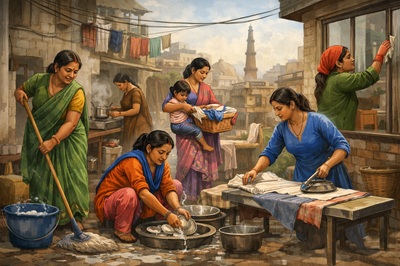
During the Mughal period, women, confined by the veil, sought companionship and devised informal pools to support one another. In the British era, the practice expanded into “Tea Parties” and “Ladies Clubs,” where Anglo‑Indian and British women also participated. Games like Ludo, Rummy, Musical Chairs, and Passing the Parcel were popular, though Tambola had not yet become central.
After the Partition of 1947, kitty parties assumed their most authentic form. Women, traumatized by displacement, found solace in gathering, sharing stories, and pooling money to help the neediest. These meetings became spaces of empathy, resilience, and solidarity.
The Rise of Tambola
Tambola, derived from the Italian game Lotto and popularized as “Housie” by the British and “Bingo” by Americans, soon became the heart of kitty parties. Its appeal lay in simplicity, suspense, and inclusivity — anyone could play, and more than one person could win. Over time, creative nicknames for numbers added humor and excitement: “Two Fat Ladies – 88,” “Ulta Pulta – 69,” “Unlucky Number – 13.” Tambola eclipsed other games and remains a defining feature of kitty parties even today.
Transformation in the 1980s and 1990s
With increasing female employment in the 1980s and 1990s, kitty parties shifted to evenings. The financial pool gradually lost importance as most women now had bank accounts. Socialization became the primary focus, with theme parties gaining popularity — Bollywood styles, festivals, or regional cultures. Games like Dumb Charades, Antakshari, and Pictionary adaptations joined Tambola. Social media further amplified the scale, with some hosts becoming sought‑after event managers.
Kitty parties acquired glamorous names such as “The Velvet Circle,” “Glitter and Gossip Gala,” and “Coffee, Pearls and Laughter.” Regional variations also emerged: Delhi parties became lavish showcases of jewellery and fashion; Mumbai gatherings were more subdued; in the South, financial pooling remained central; Bengal’s Adda combined gossip with literary and political discussions.
Kitty Parties in the Digital Age
The Covid‑19 pandemic brought a new dimension: Zoom kitty parties. Digital Tambola apps enabled automated number generation and ticket verification. While the warmth of physical presence was missed, online gatherings expanded membership and accessibility. Even today, Zoom Tambola remains popular.
Men too entered the scene, with “Buddy Kitty,” “Wine and Whine,” and “Stag Parties” organized in restaurants and bars. Corporate houses began offering kitty‑style packages for employees, recognizing their role in mental health. Venues shifted from homes to restaurants, community halls, and gardens, with recurring packages offered by event spaces.
Contemporary Horizons
In recent years, kitty parties have adapted to changing socio‑economic realities. Many professional women, pressed for time, prefer weekend gatherings with colleagues, often with an agenda beyond leisure. Senior citizens, healthier and wealthier than before, have embraced kitty‑style clubs to combat loneliness, organizing trips and cultural events.
Thus, kitty parties have evolved from simple savings groups into multifaceted social institutions — spaces of joy, resilience, and community.
While sometimes dismissed as frivolous, kitty parties have played a substantive role in the socio‑cultural landscape of India. They have contributed to women’s financial empowerment, created feminist spaces for dialogue, and strengthened interpersonal bonds. These gatherings have provided for excellent modes of self-expression and catharsis. The kitty parties have facilitated the exchange of local information, learning of strategies of survival and betterment, increasing awareness of some home remedies, encouraging attendance in cultural and religious functions of other communities, development of personal identity, and mitigate social isolation by countering the "fear of missing out".
Kitty parties face certain inhibiting factors also: financial strain on hosts, competitive ostentation, and occasional embarrassment linked to social class. Critics have long viewed them as shallow diversions for idle women. Notwithstanding the criticism, kitty parties remain the back-bone of women’s participation in society as independent individuals.
Kitty parties have taken yet another form. Many older men and women are now healthier, richer, lonely, and keen to spend some quality time with people of their own age groups. Responding to such a need, many senior citizen groups and clubs have come up to organize parties, get-togethers, and visits to various places in India and abroad. Men have also started joining such groups in increasing numbers.
In conclusion, it can be safely asserted that from Mughal afternoons to Zoom Tambola, kitty parties have continually reinvented themselves. They embody companionship, creativity, and resilience, offering women a space to celebrate life beyond domestic roles. In their journey across centuries, kitty parties have indeed touched new horizons, becoming enduring symbols of social bonding and cultural transformation.
*********

Dr. Meenakshi Saxena retired as Associate Professor in Psychology in indraprastha College for Women, Delhi. She has worked extensively in the fields of Clinical Psychology, Child Development, Delinquency, Women's Studies, Gerontology, and Spirituality.

We are trying to create a platform where our readers will find a place to have their say on the subjects ranging from socio-political to culture and society. We do have our own views on politics and society but we expect friends from all shades-from moderate left to moderate right-to join the conversation. However, our only expectation would be that our contributors should have an abiding faith in the Constitution and in its basic tenets like freedom of speech, secularism and equality. We hope that this platform will continue to evolve and will help us understand the challenges of our fast changing times better and our role in these times.
About us | Privacy Policy | Legal Disclaimer | Contact us | Advertise with us